
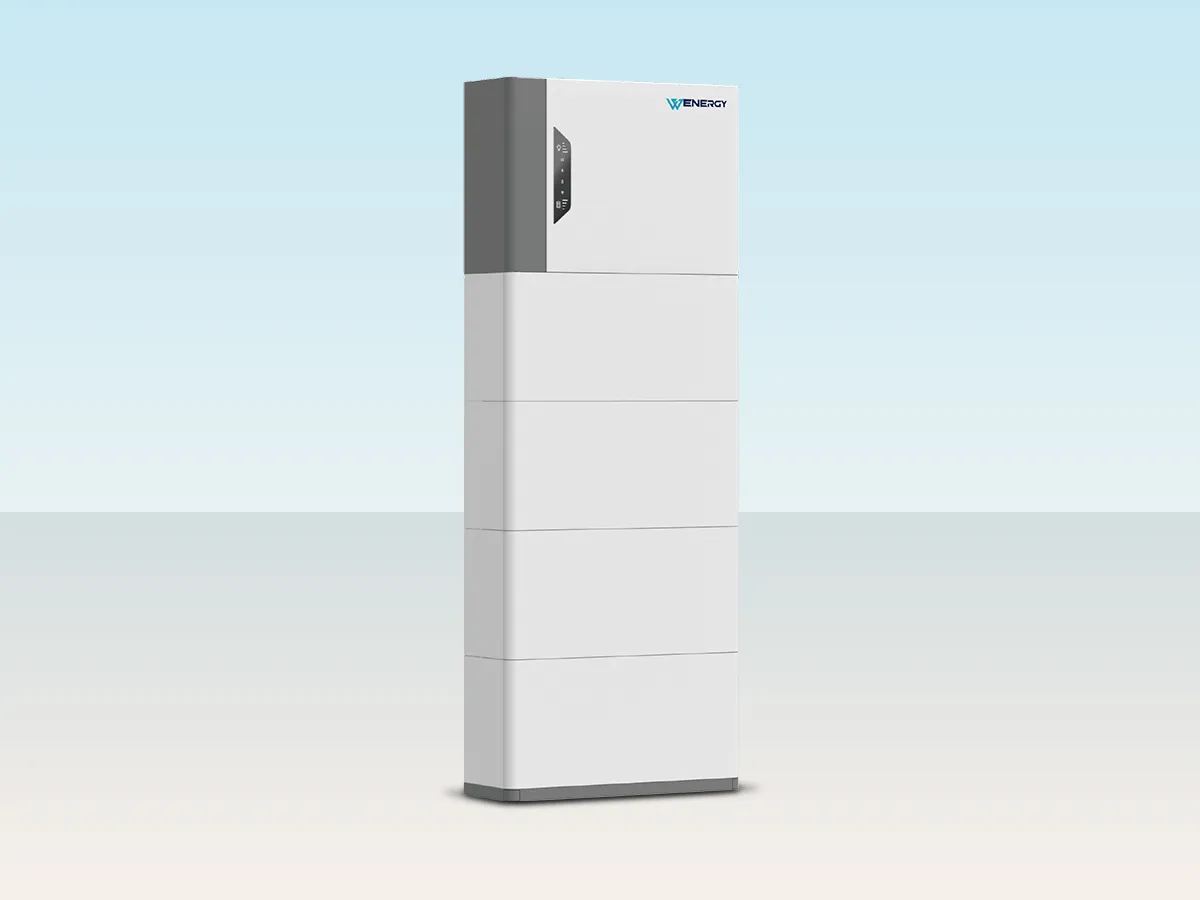
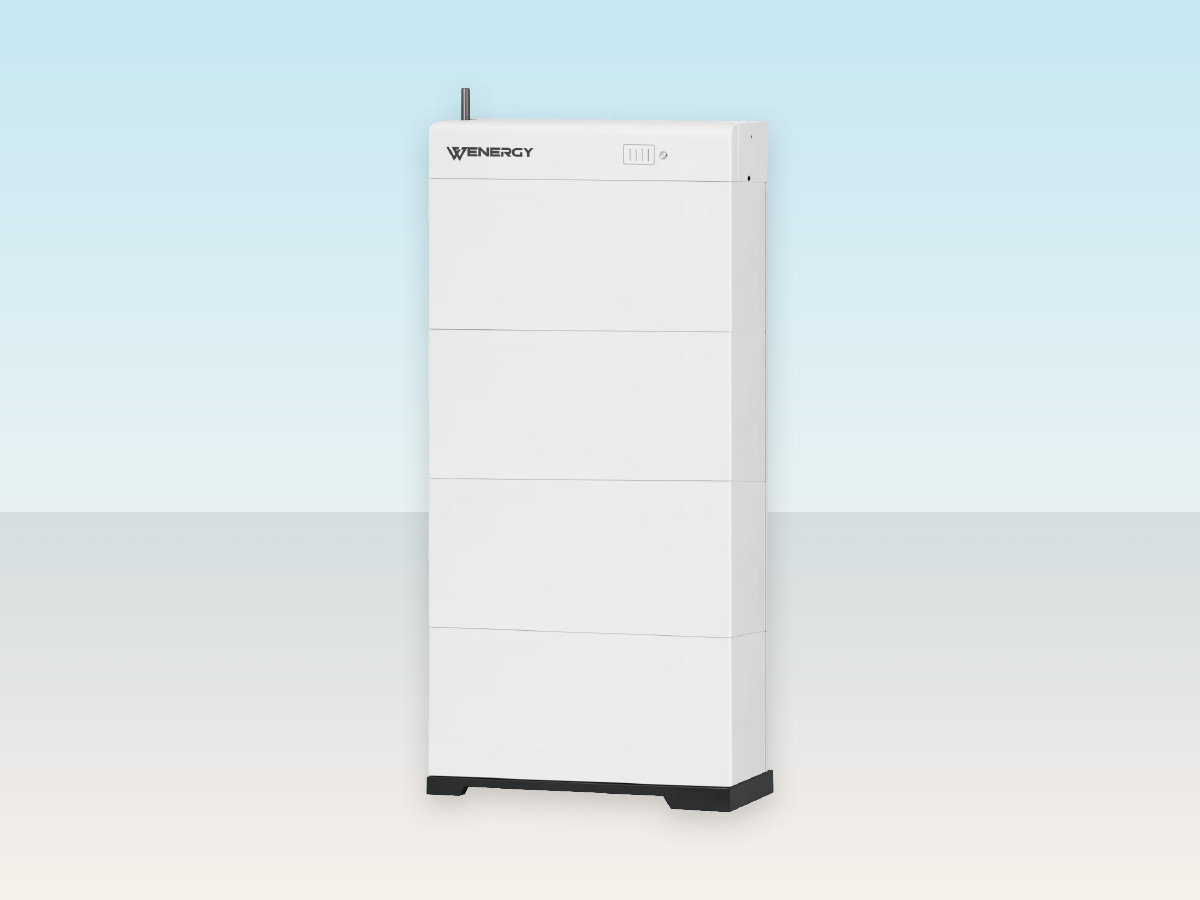
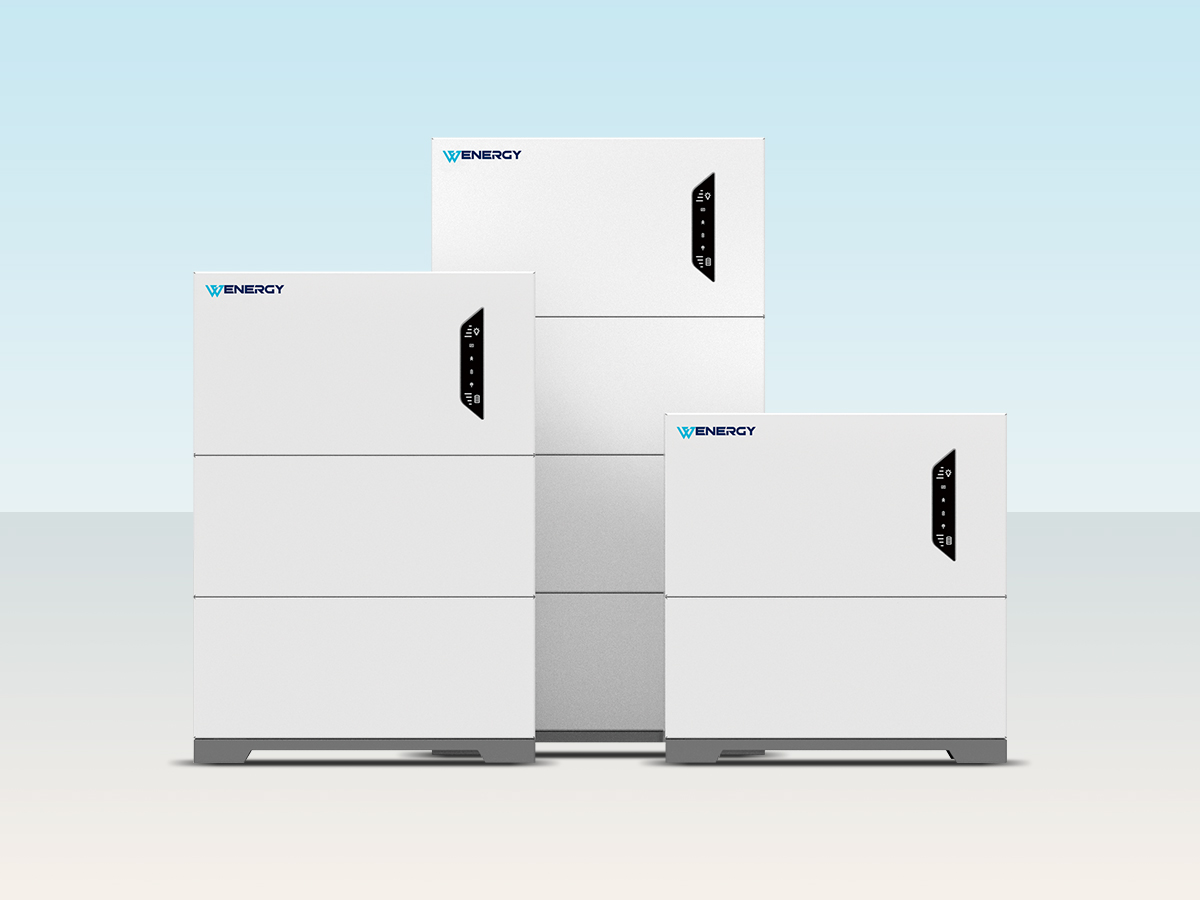
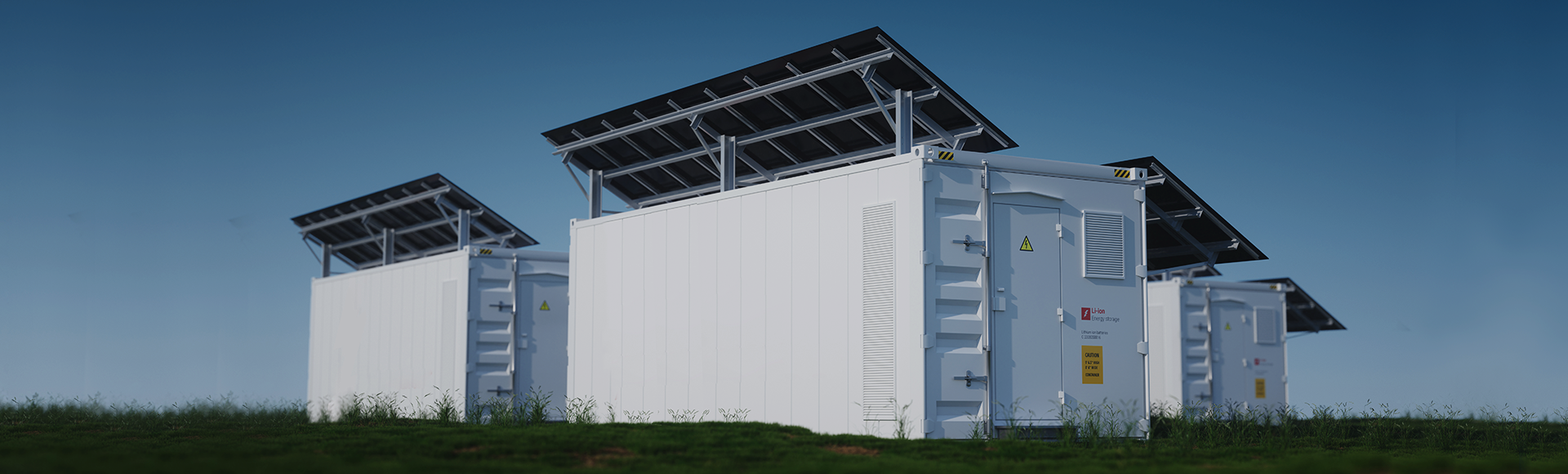
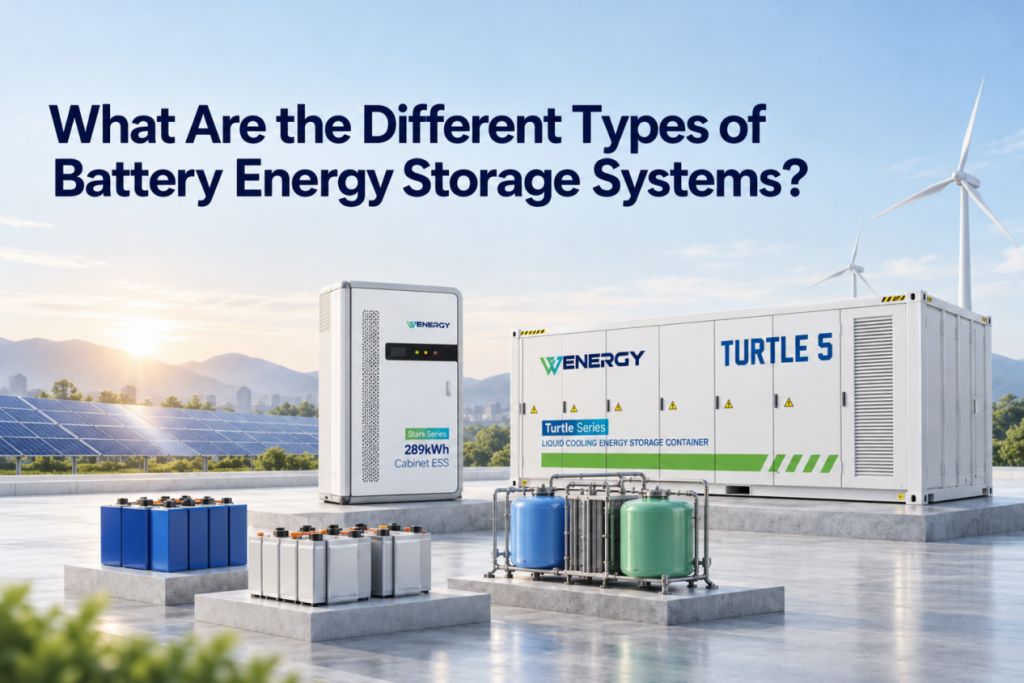
Modern electrical grids and commercial facilities face growing challenges with power stability, rising energy costs, and renewable integration. A battery energy storage system (BESS) addresses these challenges by storing low-cost or green electricity and discharging it during peak demand. Understanding the different types of battery energy storage systems helps energy managers and project developers choose the right technology for their operational needs.
Key Takeaways
- Main BESS technologies: Battery energy storage systems include lithium-ion, lead-acid, flow, sodium-ion, and sodium-sulfur batteries, each with distinct advantages, limitations, and applications.
- Different system configurations: BESS can also be categorized as C&I ESS cabinets, containerized BESS, residential ESS, and mobile ESS based on their physical design, capacity, and deployment needs.
- Key selection factors: Choosing the right BESS requires evaluating energy capacity, power rating, discharge duration, cycle life, efficiency, safety, and lifecycle costs to match specific project requirements.
What Is a Battery Energy Storage System (BESS)?
A battery energy storage system (BESS) is a technology that stores electrical energy in rechargeable batteries and releases it when needed. It allows electricity generated from solar panels, wind turbines, or the grid to be stored for later use.
For example, a commercial facility can charge its BESS system during periods of low electricity demand and discharge it during peak hours to help reduce energy costs.
A typical BESS includes several interconnected components:
- Battery Management System (BMS): Monitors battery voltage, temperature, current, and operating conditions.
- Power Conversion System (PCS): Enables bidirectional power conversion between the battery’s DC system and the AC grid or load, while controlling charging and discharging power according to system requirements.
- Energy Management System (EMS): Coordinates charging, discharging, and energy dispatch according to operational requirements.
- Thermal management system: Controls battery temperatures using air cooling or liquid cooling.
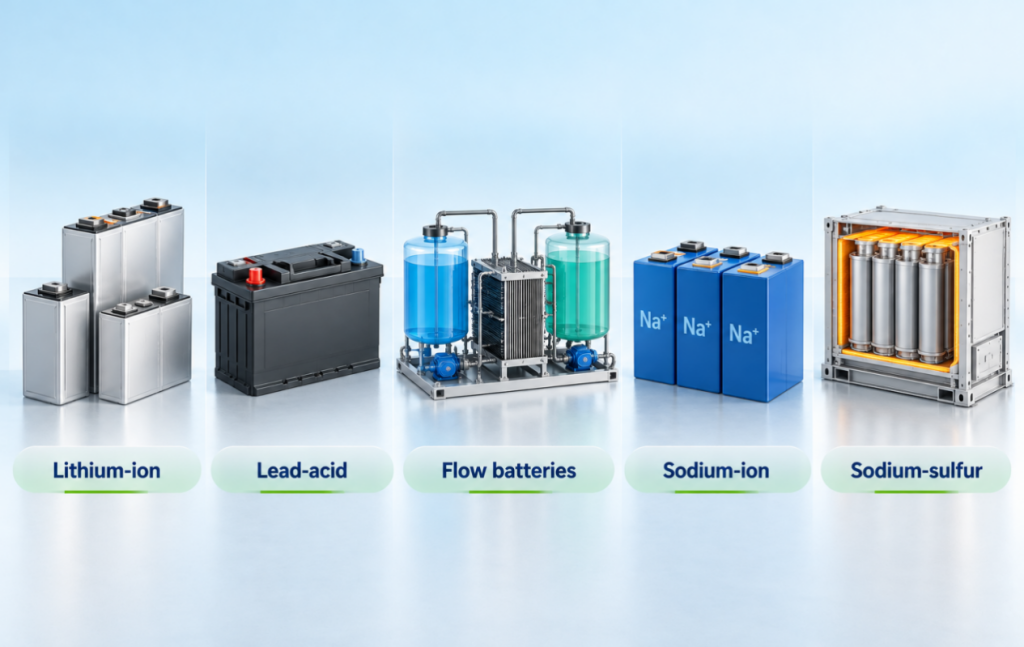
Battery energy storage systems (BESS) can be classified in two main ways: by battery chemistry and by system configuration. Chemistry-based categories include lithium-ion, lead-acid, flow, sodium-ion, and sodium-sulfur batteries, each with distinct operating characteristics.
Configuration-based categories, such as C&I ESS cabinets, containerized BESS, residential ESS, and mobile ESS, describe how the system is packaged, deployed, and used. These two classification methods are complementary rather than interchangeable.
What Are the Main Types of Battery Energy Storage Systems?
The main types of battery energy storage systems include lithium-ion, lead-acid, flow, and sodium-based batteries. Each technology offers different characteristics that influence its suitability for commercial, industrial, and utility-scale projects.
| Battery technology | Key advantages | Main limitations | Typical applications |
| Lithium-ion (LFP/NMC) | High efficiency, good cycle life, compact design | Requires thermal management; costs vary | C&I storage, renewable integration, grid support |
| Lead-acid | Mature technology, relatively low initial cost | Lower energy density, shorter cycle life | Backup power, standby applications |
| Flow batteries | Flexible energy capacity, long-duration storage potential | Larger footprint, complex auxiliary equipment | Long-duration grid storage, renewable integration |
| Sodium-ion | Alternative material supply chain, developing performance potential | Less-established commercial deployment | Emerging stationary storage applications |
| Sodium-sulfur | Suitable for multi-hour energy storage | High operating temperature, specialized maintenance | Large-scale stationary energy storage |
1. Lithium-Ion Battery Energy Storage Systems
Lithium-ion batteries are widely used in stationary energy storage, with LFP (Lithium Iron Phosphate) and NMC (Nickel Manganese Cobalt) among the commonly discussed chemistries.
LFP chemistry offers good thermal stability, a cobalt-free cathode composition, and long cycle life. These characteristics make LFP a popular choice for commercial buildings, factories, and solar energy storage projects.
NMC batteries generally offer higher gravimetric energy density than LFP batteries, making them widely used in applications where weight and space are important considerations, such as electric vehicles. LFP batteries typically provide better thermal stability and can offer longer cycle life under comparable operating conditions.
2. Lead-Acid Battery Energy Storage Systems
Lead-acid systems represent a traditional battery technology with decades of field usage. Their primary advantage is a low upfront purchasing cost.
However, lead-acid batteries generally have lower energy density and shorter cycle life than lithium-ion batteries, particularly under frequent deep cycling. They are commonly used in UPS systems, backup power, and selected stationary storage applications, but these limitations can make them less suitable for intensive daily energy storage.
3. Flow Battery Energy Storage Systems
Flow batteries store energy in liquid electrolytes held in external tanks, which are circulated through a cell stack containing a membrane. In flow batteries, power capacity is primarily determined by the size and configuration of the cell stack, while energy capacity depends mainly on the volume and concentration of the electrolyte.
This separation makes flow batteries suitable for long-duration energy storage, with discharge duration determined by the system’s energy capacity and power rating.
However, the complex pumping infrastructure, regular maintenance needs, and large installation footprint limit their adoption in space-constrained industrial sites.
4. Sodium-Based Battery Energy Storage Systems
Sodium-ion and sodium-sulfur batteries both use sodium-based materials but operate differently. Sodium-ion batteries store energy through the movement of sodium ions between electrodes, while conventional sodium-sulfur batteries use sodium and sulfur as active materials and operate at elevated temperatures. Their operating conditions and applications differ depending on the technology.
What Are the Different BESS Configurations for Energy Storage Projects?
Beyond battery chemistry, BESS installations are categorized by physical design and deployment scale. The core system architecture determines how easily equipment can be installed, maintained, and scaled over time.
1. Commercial & Industrial ESS Cabinets
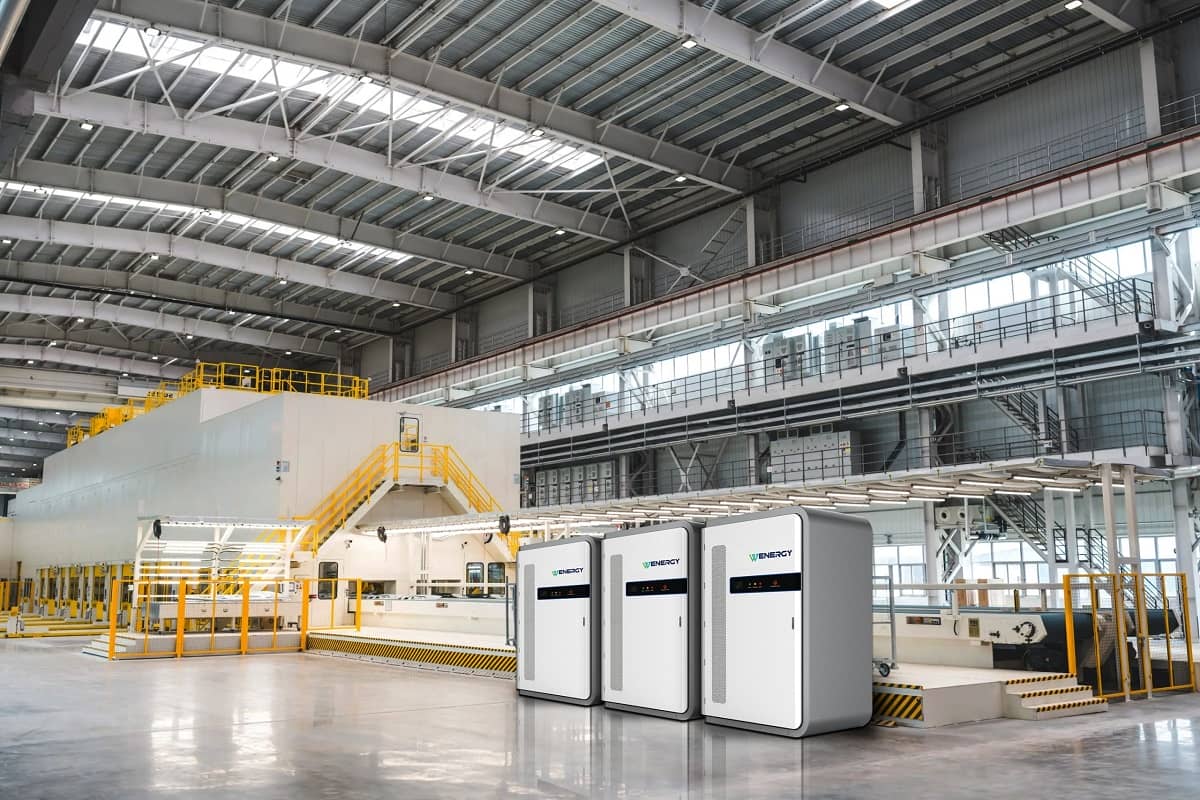
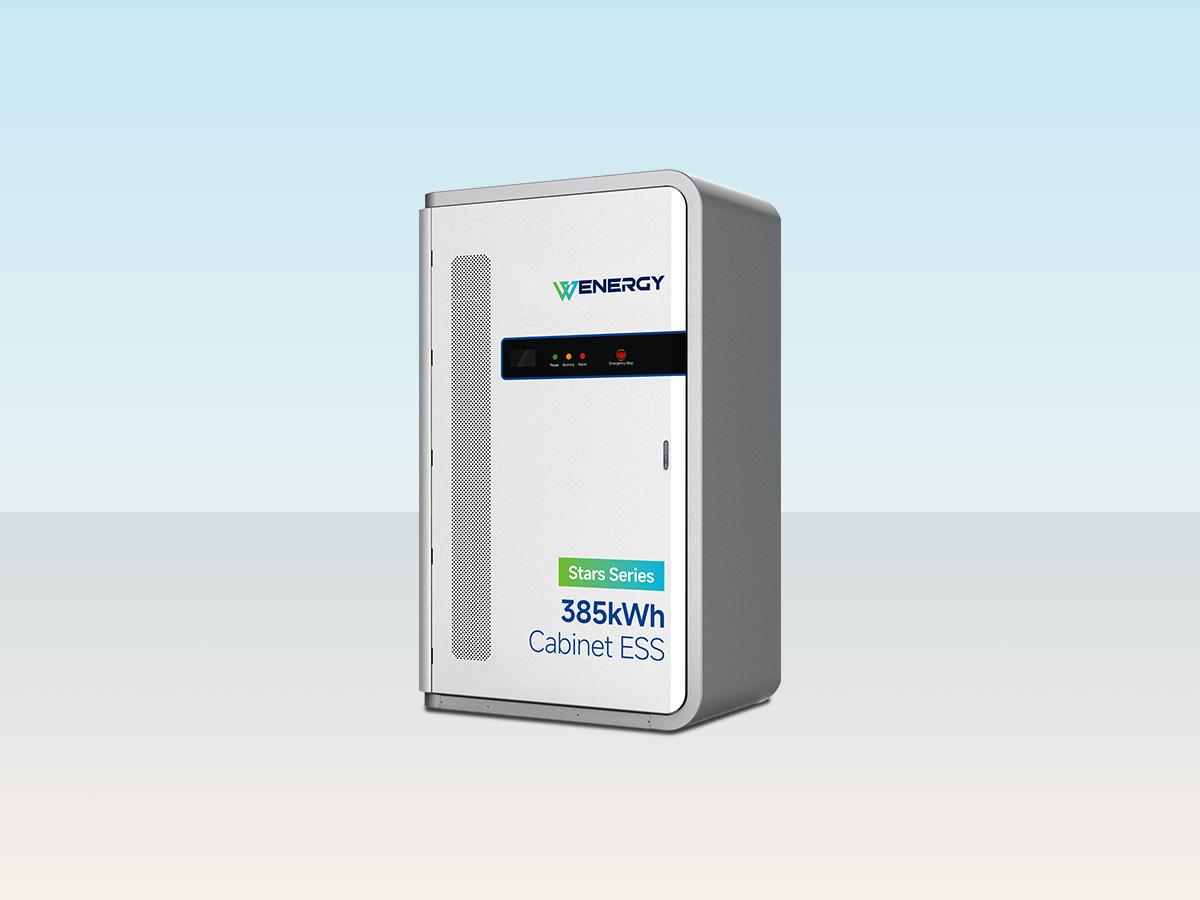
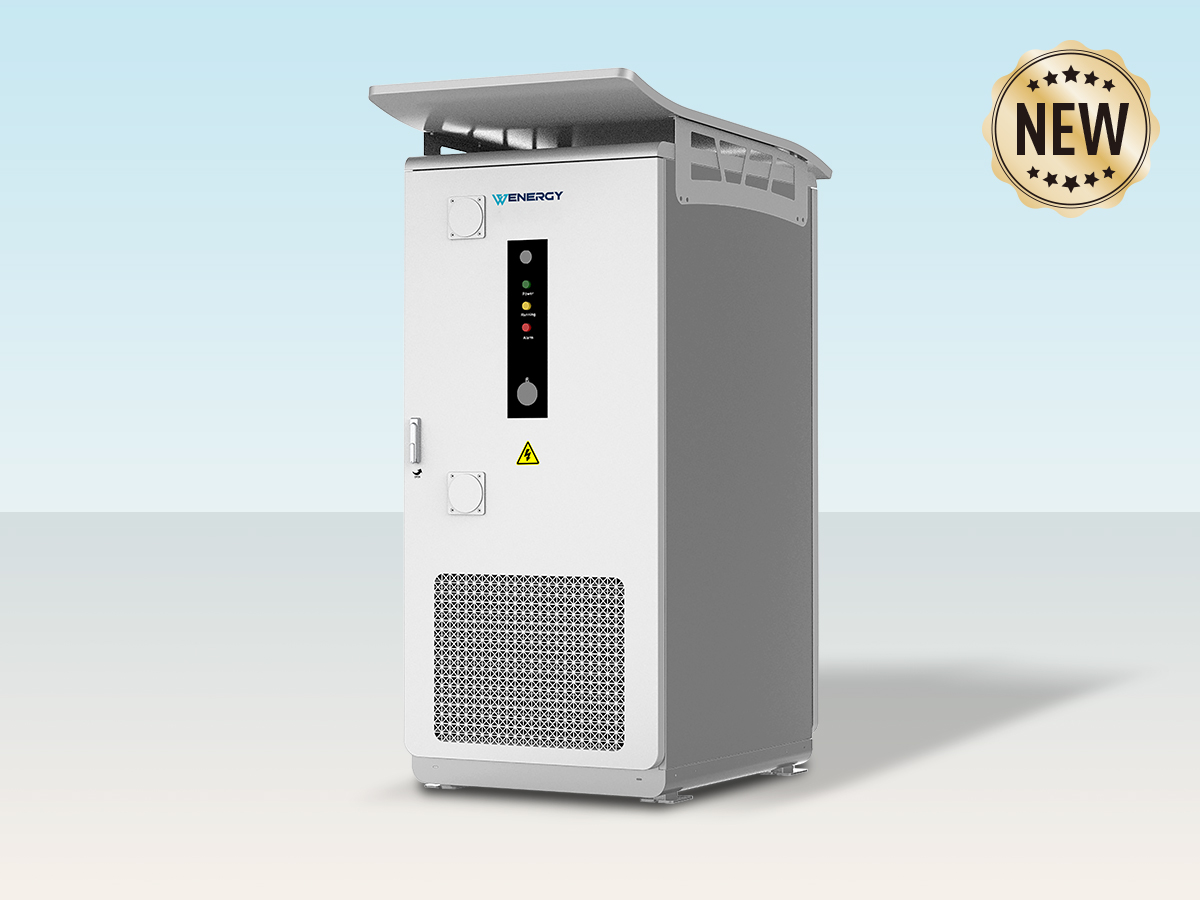
Commercial and industrial (C&I) ESS cabinets combine battery modules and supporting equipment within a relatively compact enclosure.
Depending on their design, these cabinets may integrate the PCS, BMS, EMS, cooling equipment, and fire protection components.
وتشمل التطبيقات الشائعة:
- Peak shaving and electricity demand management.
- Solar photovoltaic energy storage.
- EV charging load management.
- Backup power for commercial and industrial facilities.
Their integrated construction makes them practical for factories, commercial buildings, and other sites with limited installation space.
2. Containerized BESS
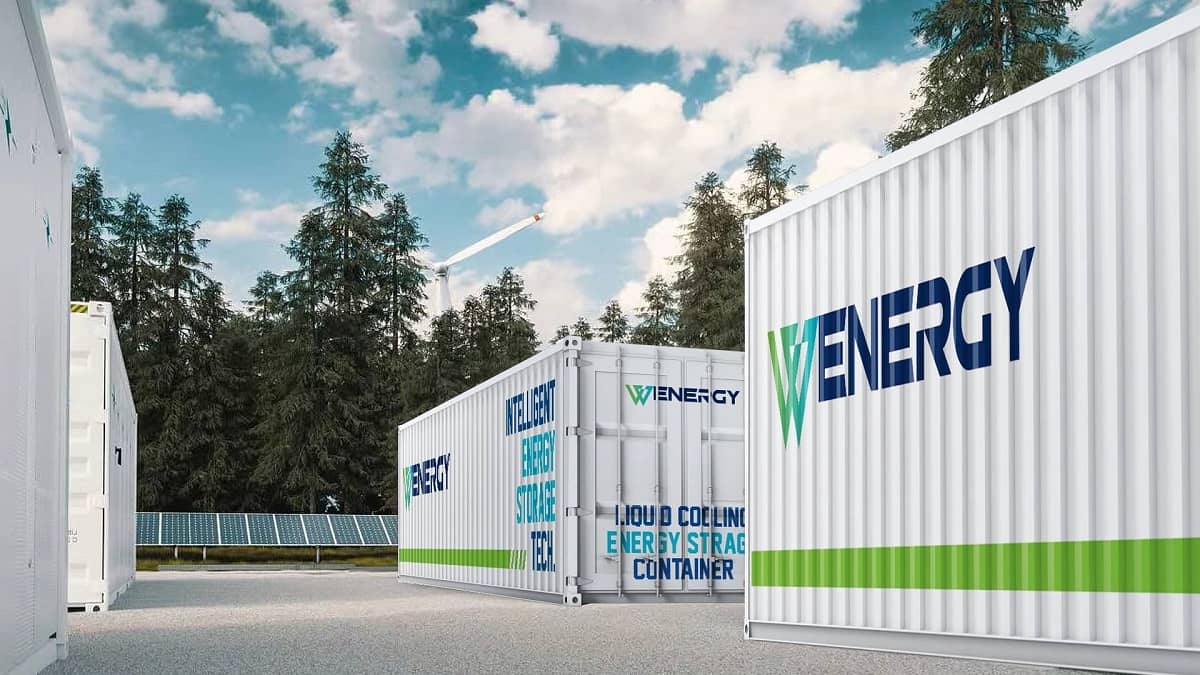
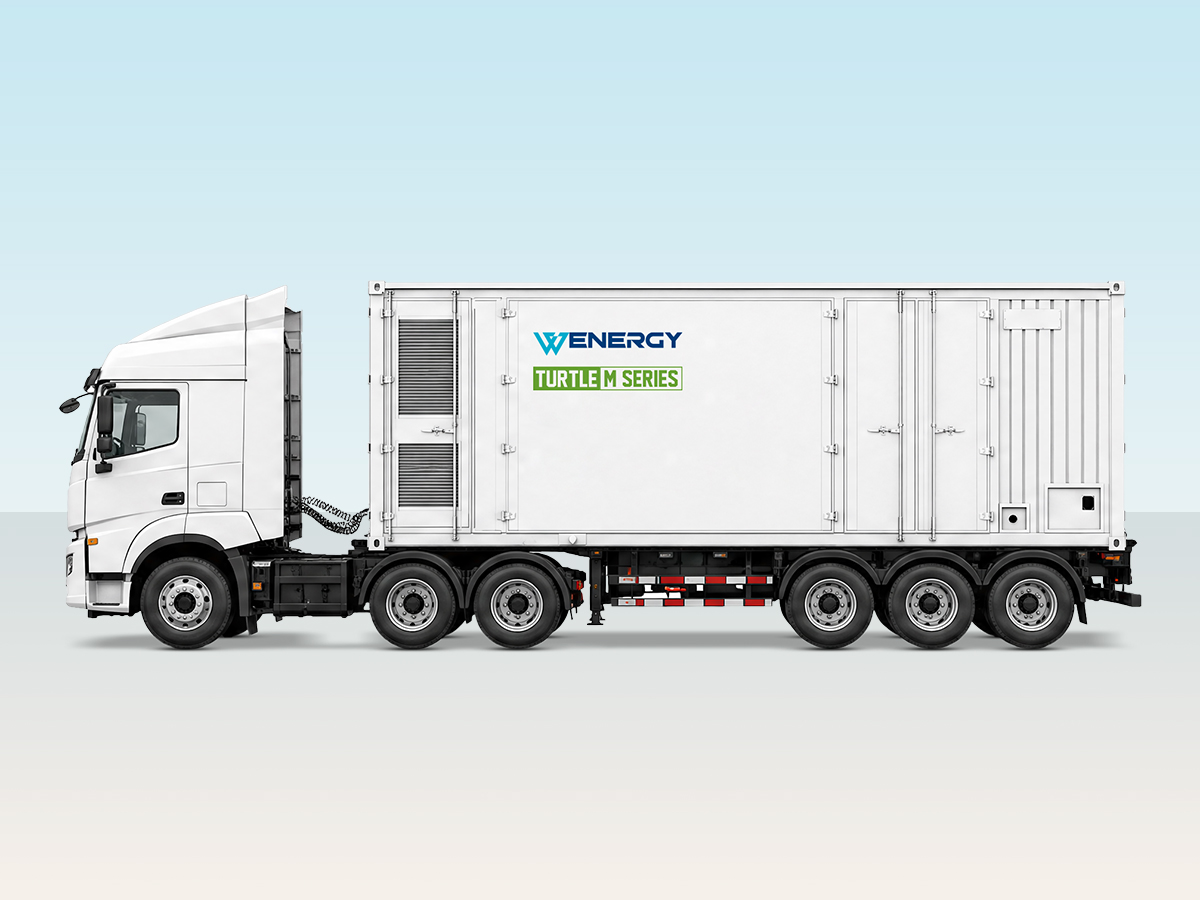
Containerized BESS solutions package high-capacity battery systems within transportable container structures.
These systems are commonly deployed in utility-scale renewable energy projects, industrial parks, and grid-support applications requiring megawatt-hour-level storage.
Their modular architecture allows developers to combine multiple units to meet larger project requirements, subject to electrical design and site constraints.
3. Residential and Mobile BESS
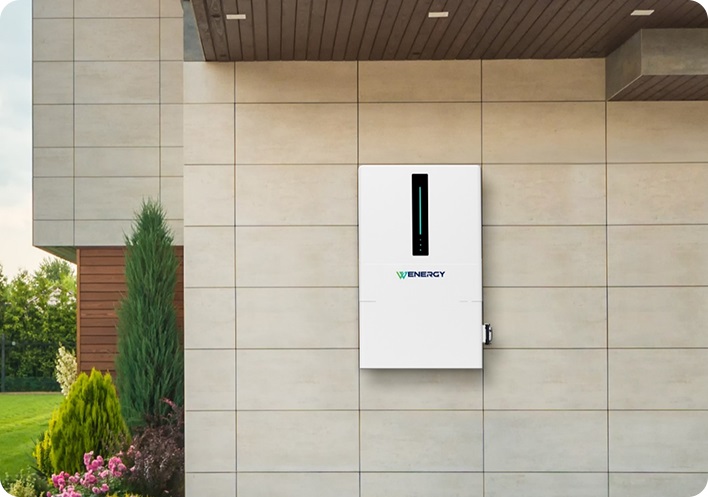
Residential BESS configurations are generally smaller systems designed for household solar storage, electricity self-consumption, and backup power.
Mobile BESS solutions prioritize transportability and can serve temporary construction sites, events, or locations requiring flexible power deployment.
How to Choose the Right Battery Energy Storage System for Your Project
Selecting a suitable BESS requires evaluating technical performance alongside operational requirements and long-term costs.
1. Determine Energy Capacity and Power Rating
Energy capacity, measured in kWh or MWh, indicates how much energy a battery can store. Power rating, measured in kW or MW, describes how quickly the system can deliver or absorb energy.
For example, a 2 MW/4 MWh BESS has a nominal discharge duration of approximately two hours at rated power. Actual usable duration depends on discharge limits, conversion losses, operating conditions, and system design.
2. Evaluate Battery Performance
Battery performance affects long-term operation and project economics.
Important indicators include:
- حياة الدورة: The number of charge-discharge cycles achievable under specified test conditions.
- Depth of discharge (DoD): The percentage of battery capacity used during discharge.
- كفاءة الرحلة المستديرة: The proportion of input energy recovered after storage.
- Degradation: The gradual reduction in usable capacity over time.
Projects requiring daily cycling should pay particular attention to expected degradation and warranty conditions.
3. Assess Safety and Thermal Management
BESS safety depends on battery chemistry, electrical protection, thermal management, and system-level engineering. Evaluate temperature monitoring, fire detection and suppression, emergency shutdown functions, and applicable safety standards.
For outdoor systems, environmental protection ratings and operating temperature limits are also important. Liquid cooling can support temperature control across large battery assemblies, but its effectiveness depends on system design.
4. Compare Total Lifecycle Costs
Initial purchase price provides only part of the financial picture.
Project developers should also consider installation, auxiliary electricity consumption, maintenance, battery replacement, and expected service life.
Evaluating the levelized cost of storage can help compare technologies with different investment and operating characteristics.
5. Match the System to Your Application
The intended application should guide both chemistry and configuration selection. C&I projects may prioritize demand management and compact installation. Utility-scale projects often require larger capacities, grid integration capabilities, and expansion planning.
Wenergy’s LFP Battery Energy Storage Solutions
طاقة provides LFP-based battery energy storage solutions for commercial, industrial, and utility-scale applications. Its product portfolio includes integrated ESS cabinets and containerized systems designed for different project capacities and operating requirements.
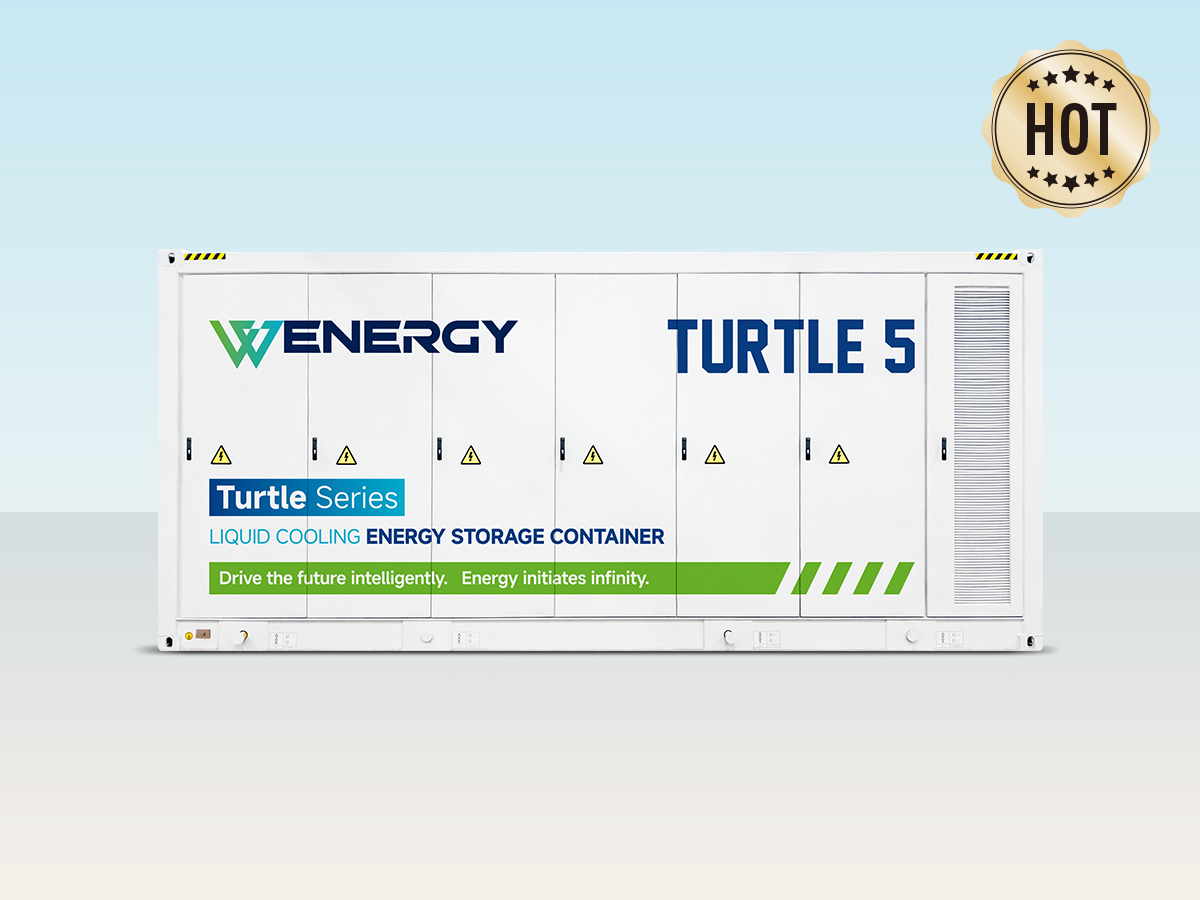
Two representative solutions are the Stars CL289Pro and Turtle Series 5MWh BESS Container.
| Specification | Stars CL289Pro | Turtle Series 5MWh |
| System type | All-in-one C&I ESS cabinet | 20ft containerized BESS |
| Rated capacity | 289 kWh | 5.016 ميجاوات |
| Rated power | 125 kW | 2.5 ميجاوات |
| Battery technology | 314Ah LFP | 314Ah cells, LFP-based |
| Cooling | Liquid cooling | Liquid cooling |
| Main features | Integrated PCS and EMS; multi-layer protection | Modular battery clusters; intelligent monitoring |
| التطبيقات | C&I energy management, peak shaving, renewable integration | Utility-scale storage, grid support, large industrial projects |
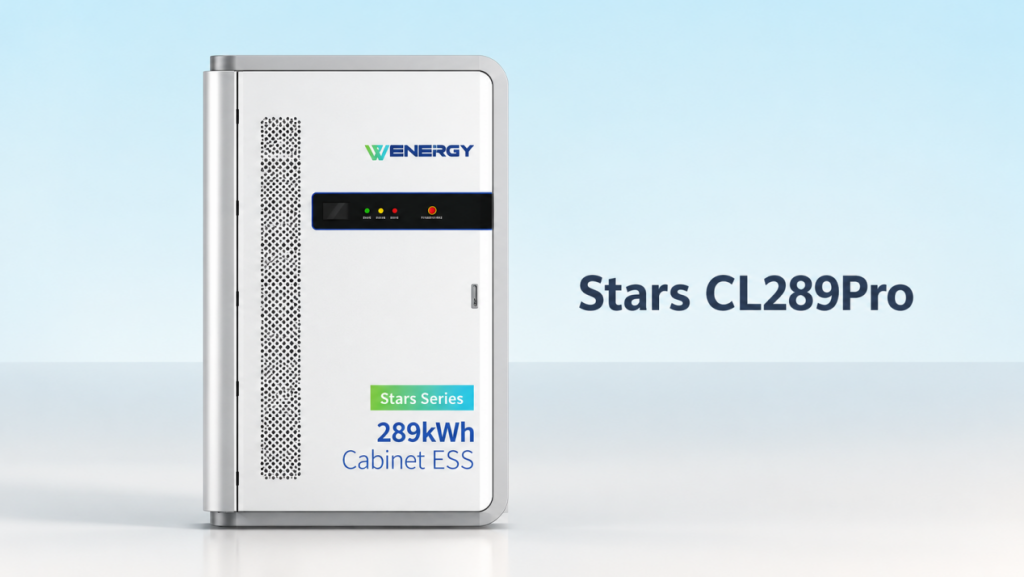
1. Stars CL289Pro: Integrated C&I Energy Storage
Its all-in-one construction integrates six battery packs, a PCS, liquid cooling, fire protection, and a built-in EMS.
Key advantages include:
- Compact integration:Cabinet dimensions of approximately 1588 × 1380 × 2450 mm support installation in space-conscious commercial and industrial projects.
- Thermal and safety management:Liquid cooling, multi-layer safety protection, and an aerosol fire suppression system.
- Long-term cycling:A specified cycle life of at least 8,000 cycles and maximum system efficiency above 89%, according to Wenergy’s product specifications.
The cabinet is designed for operating temperatures from -30°C to 55°C, with power derating required above 45°C.
These characteristics make it suitable for applications such as commercial peak shaving, solar storage, and EV charging energy management.
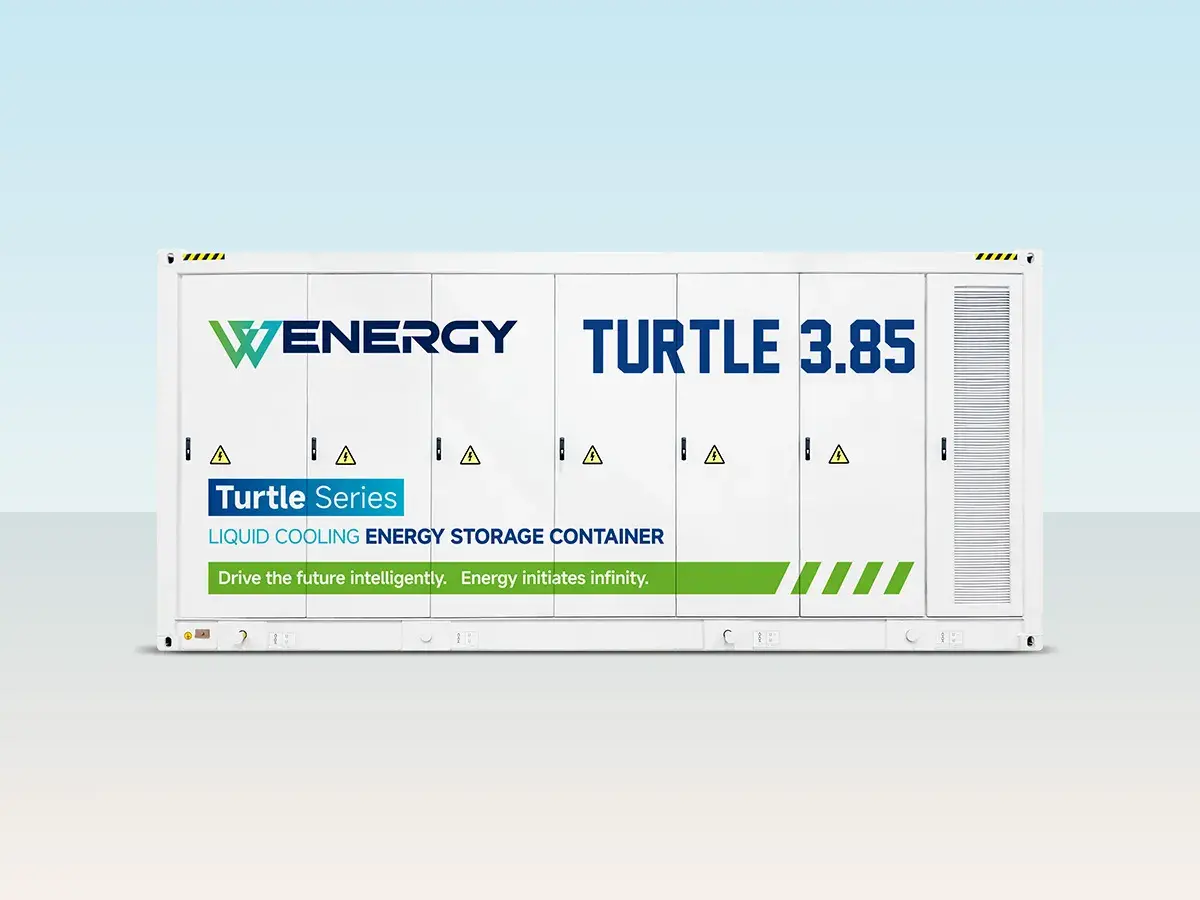
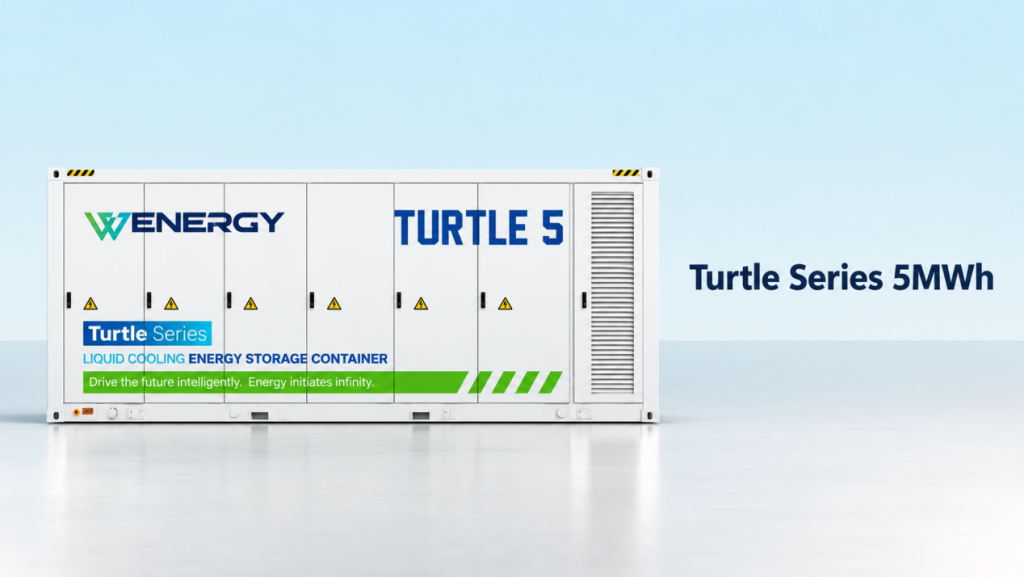
2. Turtle Series: Containerized Storage for Larger Projects
Its 20-foot container architecture incorporates six battery clusters, each containing eight battery modules, alongside battery management, liquid cooling, and fire protection equipment.
Key advantages include:
- High-capacity integration:MWh-scale energy storage within a transportable container structure.
- Modular expansion:Battery cluster architecture supports larger project-level configurations.
- Operational monitoring:Intelligent battery management and communication protocols support integration with external control systems.
- Environmental protection:Liquid cooling and IP55 protection for specified enclosure areas, with defined exceptions.
The system has a specified operating temperature range of -30°C to 50°C (with the lower limit excluded), with derating required above 45°C.
It is designed for large renewable energy installations, utility-scale grid support, industrial energy management, and microgrid applications.
Both Wenergy solutions use LFP technology , but their different capacities and configurations address distinct project requirements.
Conclusion
Different types of battery energy storage systems offer distinct advantages in performance, cost, and applications. Choosing the right solution requires evaluating battery chemistry, system configuration, safety, and project requirements.
اتصال Wenergy’s teams to find suitable options for commercial, industrial, and utility-scale projects.
Post time: Nov-12-2026