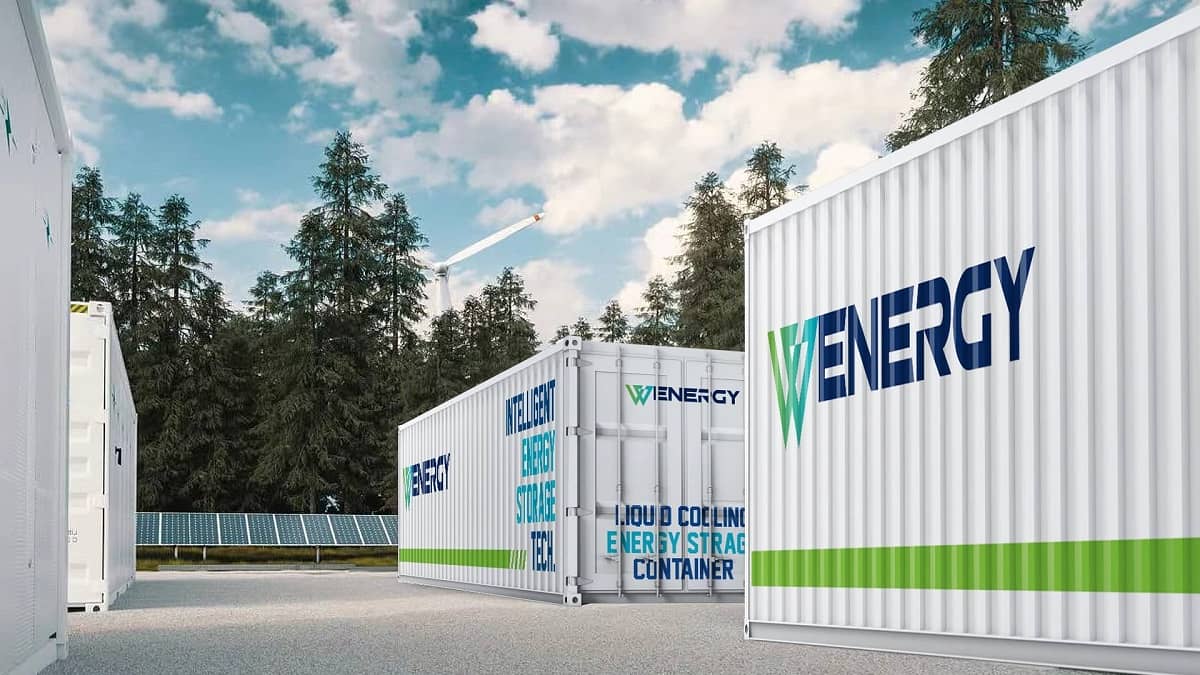
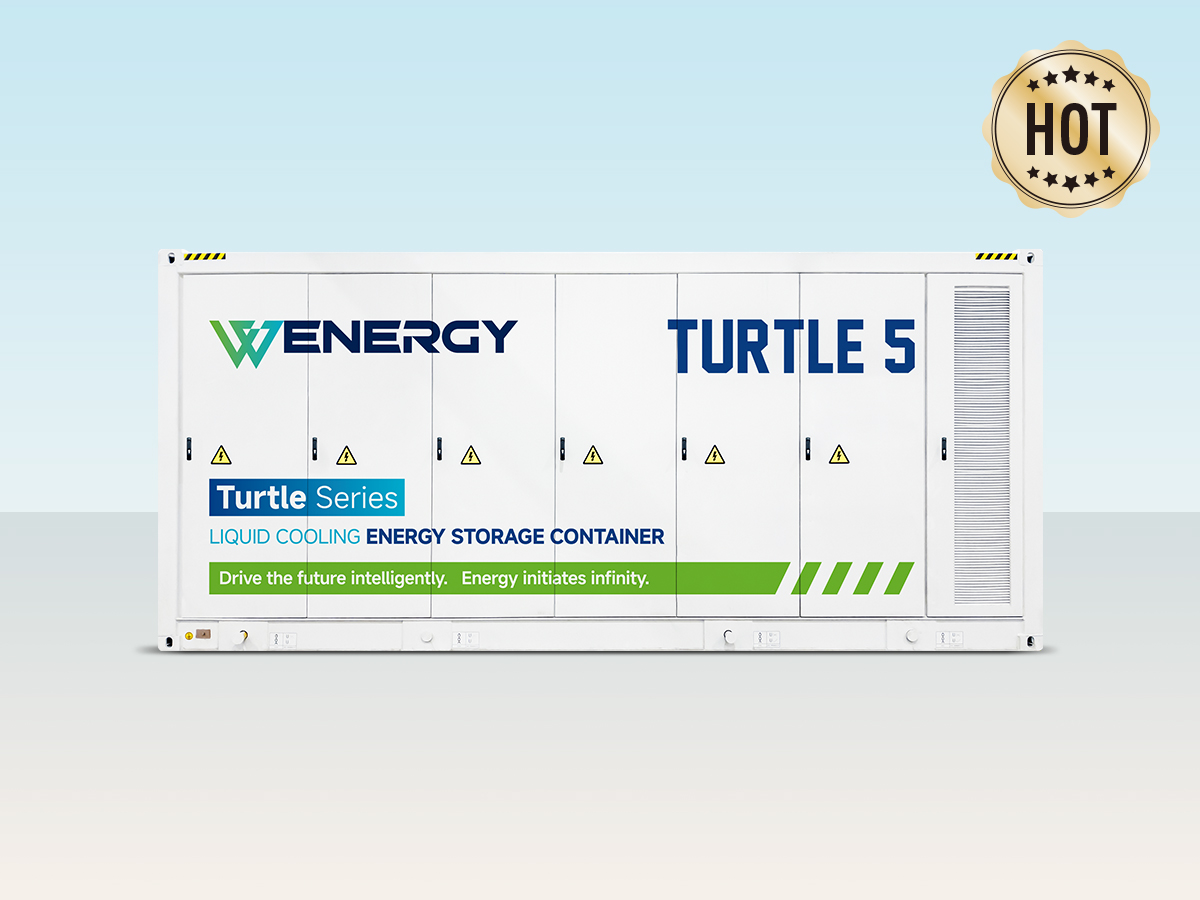
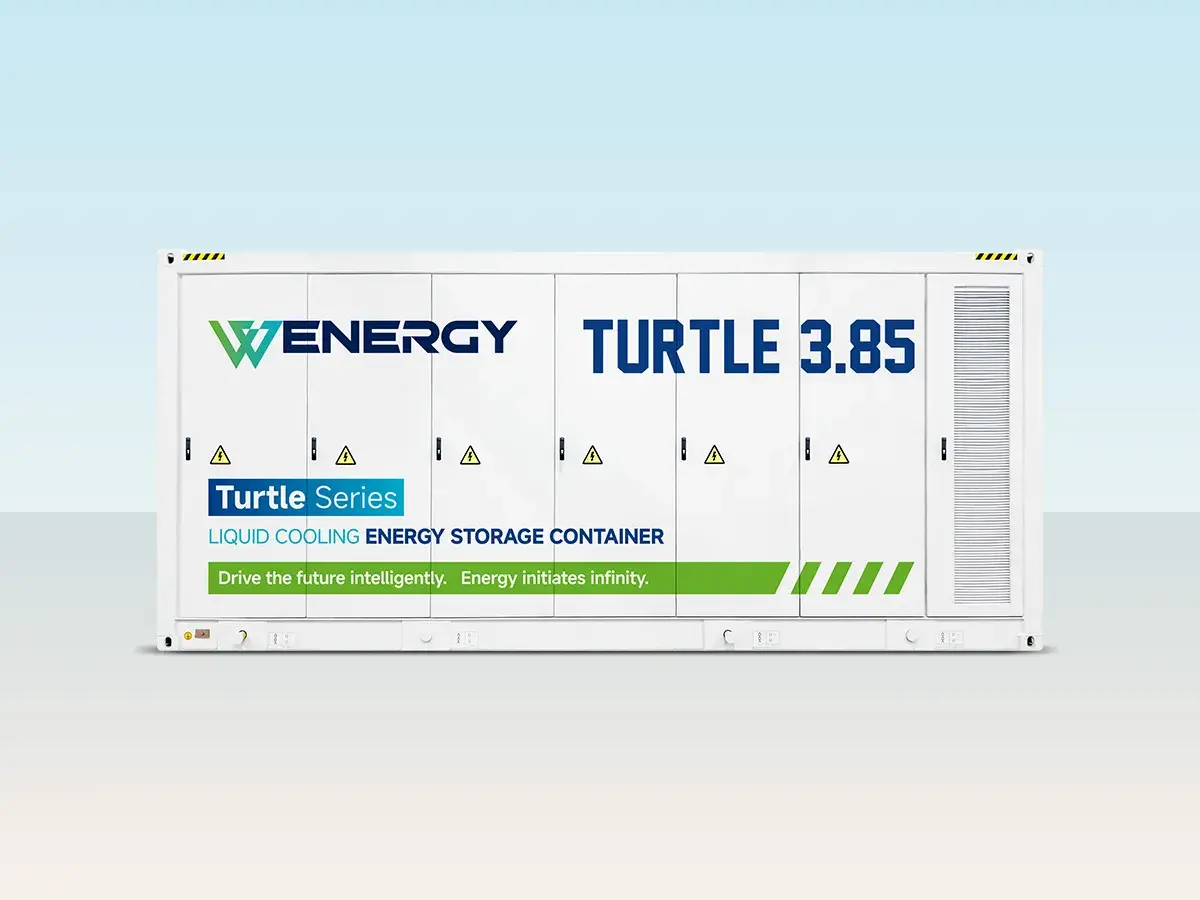

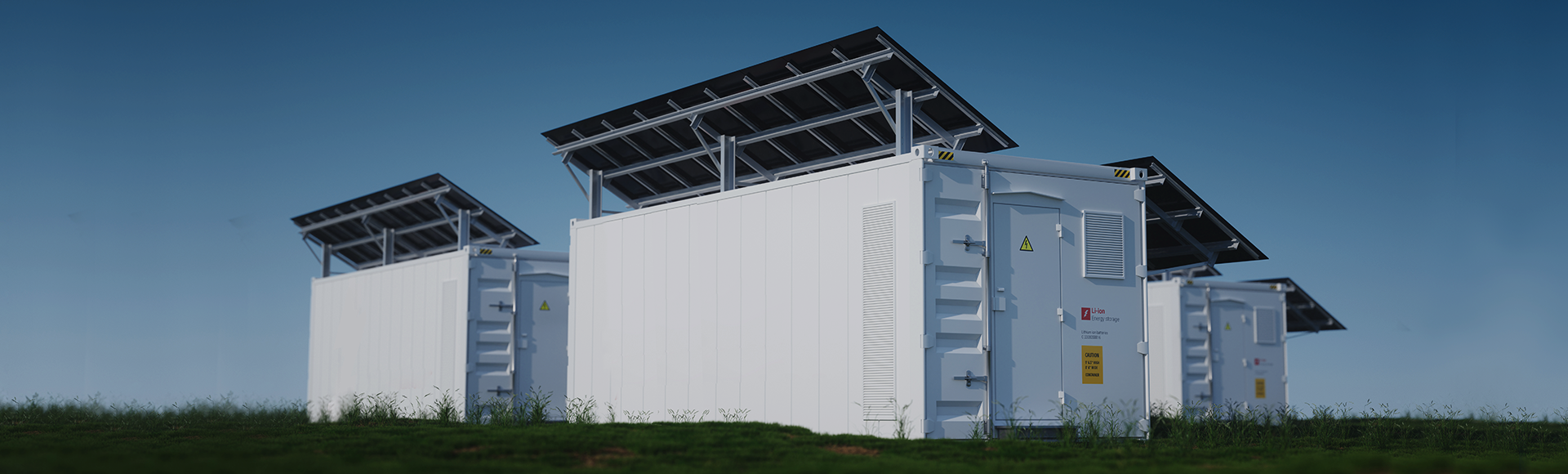
When the lights go out, you don’t just lose electricity — you lose warmth, safety, connection, and the rhythm of ordinary life. Ukraine has lived this reality. But from that darkness, something extraordinary is emerging: a new energy architecture built on resilience, decentralization, and the determination to never be vulnerable again.
We have spent years studying energy storage markets across Europe — Spain, Italy, Poland, the Baltics. But nowhere have we seen what is happening in Ukraine right now. It is not a market story. It is a story of a nation rebuilding its energy identity in real time, under conditions no other country has faced.
This article is our attempt to understand what you are going through — not as outsiders looking in, but as partners who believe Ukraine’s energy future is one of the most important stories of our time. We don’t pretend to know what it feels like to live through what you are living through. But we do understand batteries, power grids, and the economics of energy independence. And we want to share what we see — because we believe in what you are building.
The Scale of What Was Lost
To understand where Ukraine’s energy storage market is going, we must first be honest about what has been lost. Before 2022, Ukraine operated one of Europe’s largest power systems — approximately 40 GW of installed capacity, anchored by nuclear, thermal, and hydroelectric generation. It was a system designed for a peacetime country of 40 million people. Then the attacks came. Systematic, targeted, and devastating.
- Ukraine’s Energy System: Before & After
- Pre-war installed capacity~ 40 GW
- Available capacity (mid-2024 estimate)~ 10 GW
- Thermal generation damaged or destroyed> 80%
- Projected winter capacity deficit~ 6 GW
- Daily outages in Kyiv (2024 peak)> 10 hours
Nearly two-thirds of Ukraine’s dispatchable power capacity has been damaged, destroyed, or is located in occupied territory. President Zelensky has publicly stated that multiple waves of attacks have destroyed about half of the country’s energy capacity. In major cities, buildings have endured daily power cuts exceeding 10 hours — in winter, with temperatures dropping to -20°C.
But here is what strikes us most: Ukraine did not surrender to the darkness. Instead, it made a strategic decision that few countries would have the courage to make under such circumstances: to fundamentally redesign its energy system around decentralization, distributed generation, and energy storage.
We are no longer debating whether Ukraine needs distributed generation. We are discussing how to scale it up as quickly as possible. Resilience is determined not only by the volume of electricity generated, but by the architecture of the energy system.
— Valentyna Moskalenko, Deputy Minister of Energy of Ukraine
The Vision: Energy Cells
Ukraine’s answer to centralized vulnerability is the concept of “Energy Cells” — autonomous or semi-autonomous clusters where critical infrastructure can continue operating even when the central grid is damaged. This is not just a technical concept; it is a philosophy of national resilience.
The architecture has three layers:
- Nuclear foundation: Nuclear plants provide grid stability that cannot be replaced. Ukraine will continue developing its nuclear sector as the backbone.
- Flexibility & storage layer: Flexible generation, battery energy storage systems (BESS), and new generation facilities deployed in the regions with the greatest electricity deficits — northern, eastern, and southern Ukraine, plus the Kyiv region.
- Local autonomy: Cogeneration, small-scale gas units, decentralized heat and water supply — managed by local authorities, empowering communities to be self-sufficient.
What this means for energy storage is profound: batteries are no longer a “green option” or a “nice-to-have.” They are classified as critical national security infrastructure. They sit at the intersection of energy policy, defense strategy, and community resilience.
Ukrenergo’s Acting CEO Oleksii Brekht has stated that at least 1.5 GW of storage capacity will be required in the next decade just to maintain reliable grid operation. That is a decade-long demand signal — and it is just the beginning.
The Fastest Energy Storage Build-Out in Europe
Here is where the story moves from vision to reality — and the numbers are staggering. In one year, Ukraine’s installed energy storage capacity increased by more than 300 times, exceeding 600 MW. According to SolarPower Europe’s “European Battery Market Outlook 2026–2030,” Ukraine added approximately 3 GWh of battery capacity in 2025 alone, joining the top five European leaders in storage capacity growth — alongside Germany, the UK, and Italy.
- Ukraine Energy Storage: Key Numbers
- Installed storage capacity (end of 2025)> 600 MW (300x growth YoY)
- New battery capacity added in 2025~ 3 GWh
- European rankingTop 5 in growth
- Projected storage by 2030 (conservative)1.5 GW
- Projected storage by 2030 (market estimate)2,750 MWh
- Projected battery storage market by 2026~ $2.1 billion (+180%)
What makes this remarkable: Most European countries took 5–10 years to reach their first GWh of storage. Ukraine did it in under two years — from a near-zero baseline, under active warfare, with supply chains stretching through Poland and Romania. This is not normal market growth. This is a nation building its survival infrastructure at wartime speed.
The Landmark Projects
September 2025
DTEK + Fluence: 200 MW / 400 MWh — The largest energy storage complex in Eastern Europe, spanning six sites across Kyiv and Dnipropetrovsk regions. €125 million investment. 698 Fluence Gridstack units. Enough to power 600,000 households for two hours. Commissioned despite the risks of war — a powerful signal that business is ready to invest in Ukraine’s future.
2024 – Ongoing
Ukrhydroenergo: 197 MW BESS + 35.9 MW Solar — A state-owned hybrid project combining hydroelectric generation with battery storage and solar, financed by the World Bank ($177M) and Clean Technology Fund ($104M). The first time a Ukrainian state-owned company has implemented a large-scale BESS project based on public international financing.
August 2024
Ukrenergo’s First Ancillary Services Auction — 39 companies competed for 99 MW of frequency containment reserve contracts. 12 winners. Five-year, euro-denominated contracts. This single event launched the commercial storage market in Ukraine.
May 2025
Second Ukrenergo Auction: 249 MW of fast reserves procured, with energy storage technologies playing a dominant role.
The Policy Revolution
What impresses us most about Ukraine is not just the speed of deployment — it is the sophistication of the policy framework being built simultaneously. In less than three years, Ukraine has constructed one of the world’s most aggressive energy storage incentive systems. Let us walk through the key pillars:
Zero-Tariff Gateway
Since July 2024, Ukraine has waived all VAT and import duties on energy storage equipment, solar panels, and power generation systems. This policy has been extended through 2028. For any business considering storage investment, this eliminates a significant capital cost barrier.
The “Active Consumer” Model
Perhaps the most transformative policy: businesses and households that install generation and storage capacity can not only cover their own needs but sell surplus electricity back to the grid. This turns a storage system from a pure cost center into a revenue-generating asset.
Law No. 4777-IX: The Renewable Energy Overhaul
Signed by the President in March 2025, this landmark legislation reformed 15 energy-related laws. The highlights:
- Feed-in Premium (FiP) replaces Contracts for Difference (CfD) — a more transparent, market-aligned revenue model
- Green auctions extended to 2034 — giving investors a 10-year planning horizon
- Solar+Storage as a separate auction category with a minimum 10% quota — double the allocation for standalone solar or wind
- BESS under 5 MW exempt from licensing — dramatically lowering the barrier for C&I storage
- Co-location rights — BESS operators can install generation alongside storage without a separate license
- Flexible grid connection — a pathway to grid access for hundreds of projects stuck in queues
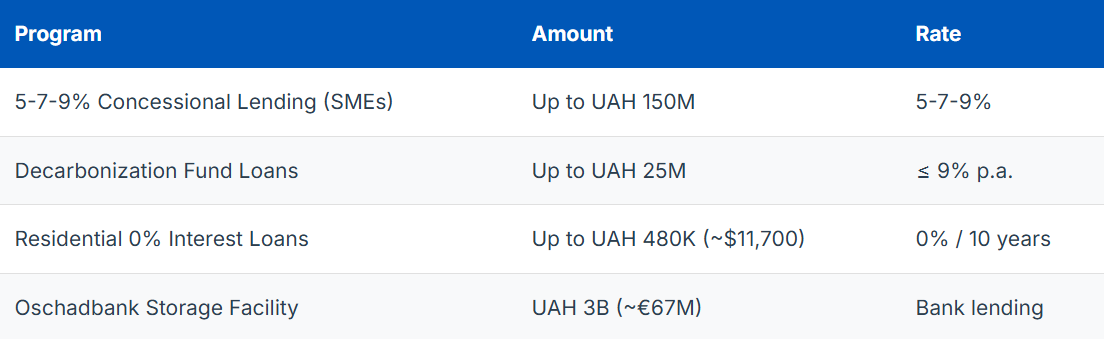
Financing Programs
The Economics: Why Storage Makes Sense Now
For any Ukrainian business leader evaluating whether to invest in energy storage, the economics have rarely been more compelling. Let us break down the revenue stack:
1. Peak-Valley Arbitrage
Ukraine’s industrial electricity pricing structure creates a significant peak-valley spread:
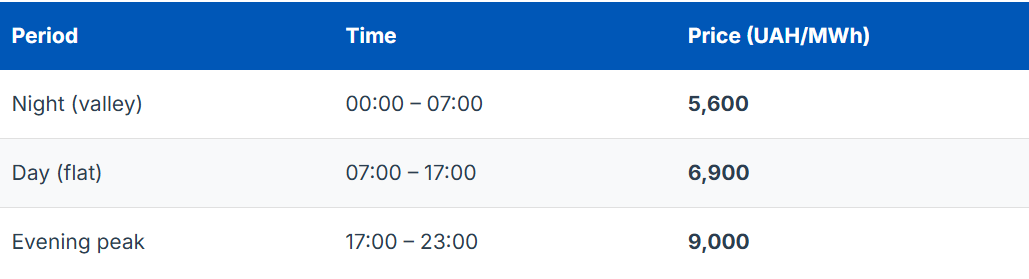
The peak-to-valley price ratio is approximately 1.6:1. Charging during off-peak hours and discharging during peak creates immediate, measurable savings — especially for energy-intensive industries.
2. Ancillary Services Revenue
This is where Ukraine’s market is truly unique. Ukrenergo’s long-term ancillary services auctions offer five-year, euro-denominated contracts for frequency regulation — providing guaranteed, bankable revenue:
Ukrenergo Ancillary Services Auction Results
- Frequency Containment Reserve (FCR) — weighted avg €14–15 / MW·h
- Upward aFRR — weighted avg €18 / MW·h
- Symmetric aFRR — weighted avg €24–27 / MW·h
- Contract duration 5 years, EUR-denominated
- Comparable European market rates €1.5–3 / MW·h (5–10x lower)
The key insight: Ukraine’s ancillary services prices are 5–10 times higher than in mature European markets. This reflects the extreme need for grid balancing capacity — and it means that for storage operators, ancillary services revenue alone can cover a significant portion of investment costs, before considering arbitrage and outage protection value.
3. Outage Protection & Business Continuity
Beyond direct revenue, there is the value of what storage prevents: production stoppages, equipment damage, data loss, and the human cost of working without power. For a factory, a hospital, or a communications center, the cost of one extended outage can exceed the annual cost of a storage system. In Ukraine’s current environment, this “resilience premium” is not theoretical — it is experienced every day.
4. The “Active Consumer” Revenue Stream
With the new legal framework, businesses can sell surplus generation back to the grid, creating a third revenue layer. A well-designed solar+storage C&I system can thus generate income from three simultaneous streams: arbitrage savings, ancillary services, and surplus power sales.
The International Community Is Investing
Ukraine’s energy rebuild is not happening in isolation. The international financial architecture supporting it is unprecedented:
- EBRD — the largest institutional investor in Ukraine, deploying €2.4 billion in 2024 alone, €6.2 billion since 2022. Launched a €700 million Energy Security Support Facility (ESSF) specifically for decentralized generation, energy storage, and efficiency projects.
- World Bank / IBRD — $177 million in financing for Ukrhydroenergo’s 197 MW storage project.
- MIGA — over $4 billion in political risk guarantees, including war and civil disturbance coverage.
- EBRD War Risk Facility — €300M+ in first-loss coverage to make commercial lending viable in wartime.
- EU Flagship Reconstruction Fund — targeting €500M initial close in 2026, mobilizing private capital for energy infrastructure.
What this means for Ukrainian businesses: capital is available. The financing channels exist. The risk insurance mechanisms exist. The policy framework supports investment. The missing piece is often simply knowing which solutions fit, how to structure the project, and who to partner with.
What Ukraine Needs Now
Having studied this market deeply, we see several gaps that are not yet filled — and where we believe the greatest opportunity lies for Ukrainian businesses:
- The 1–10 MW C&I segment is underserved. Most large projects focus on grid-scale (10 MW+) or residential (under 10 kWh). The middle — factories, hospitals, commercial centers, agricultural facilities — is where the practical need is most acute and where standardized solutions can have the fastest impact.
- Cold-climate performance is non-negotiable. Ukraine’s winters demand energy storage systems that perform reliably at -20°C. Not all products on the global market can meet this requirement.
- Grid-island switching and black-start capability are essential features, not optional add-ons. In Ukraine, the ability to disconnect from a failing grid and operate autonomously — then help restart the grid when it recovers — is a daily necessity, not a theoretical scenario.
- Speed of deployment matters as much as cost. A system that takes 12 months to deliver is less valuable than one that can be operational in 6 weeks. Ukraine’s energy situation changes by the week.
- Integration with ancillary services — the best C&I storage systems are those that can participate in Ukrenergo’s frequency regulation auctions, adding a revenue stream that improves ROI significantly.
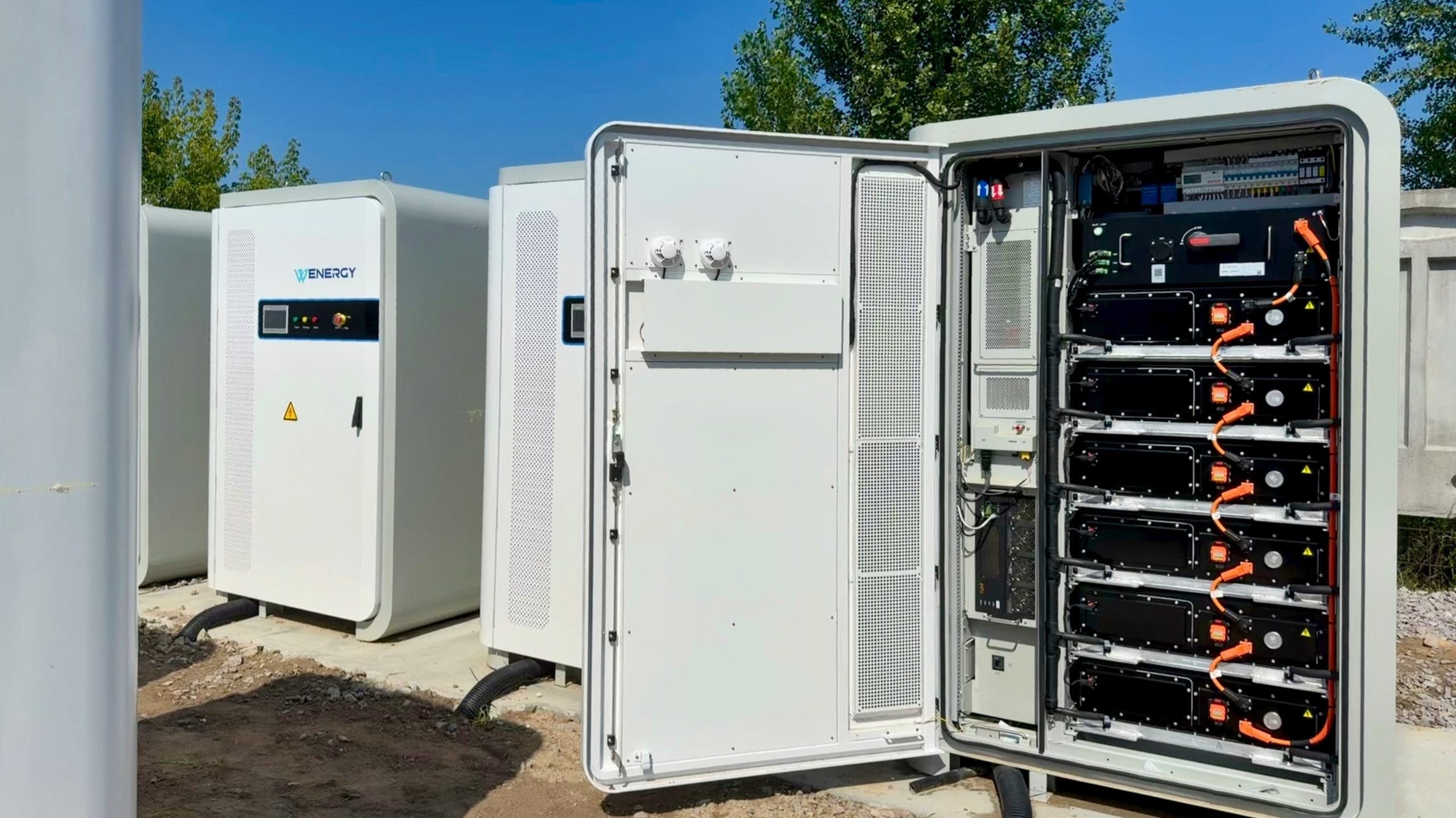
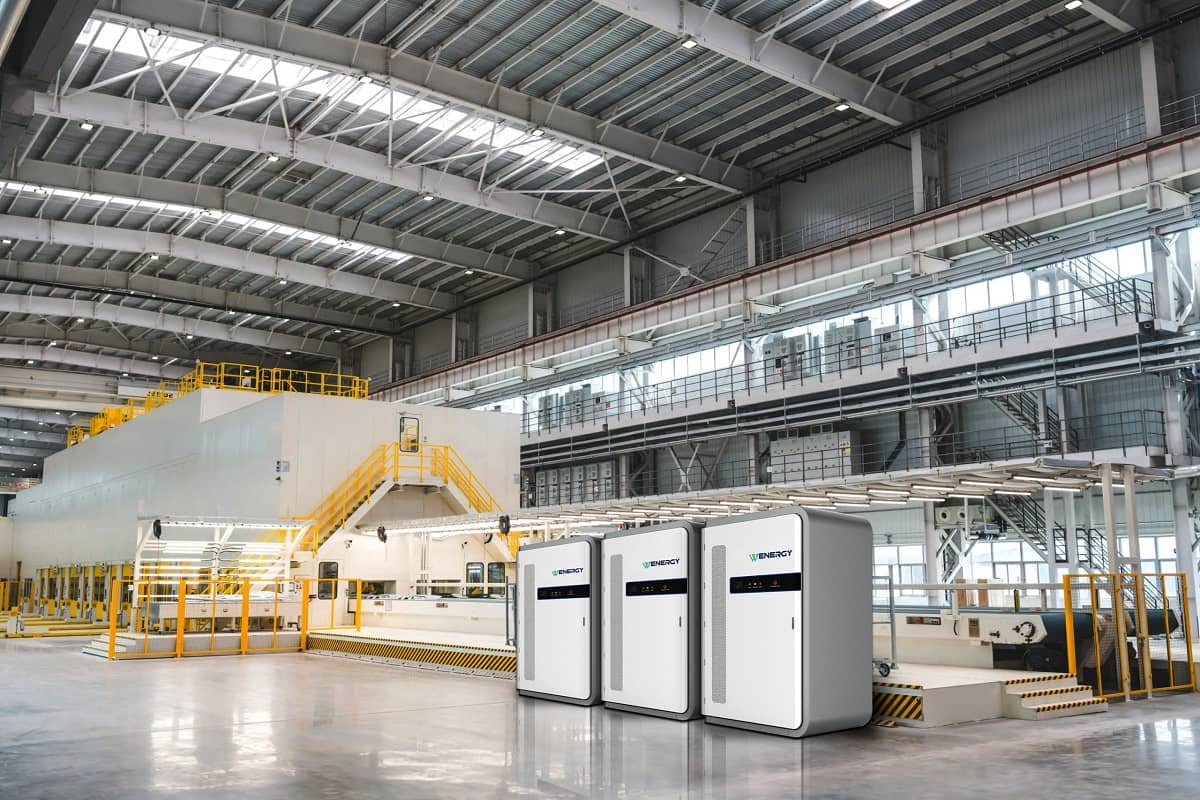
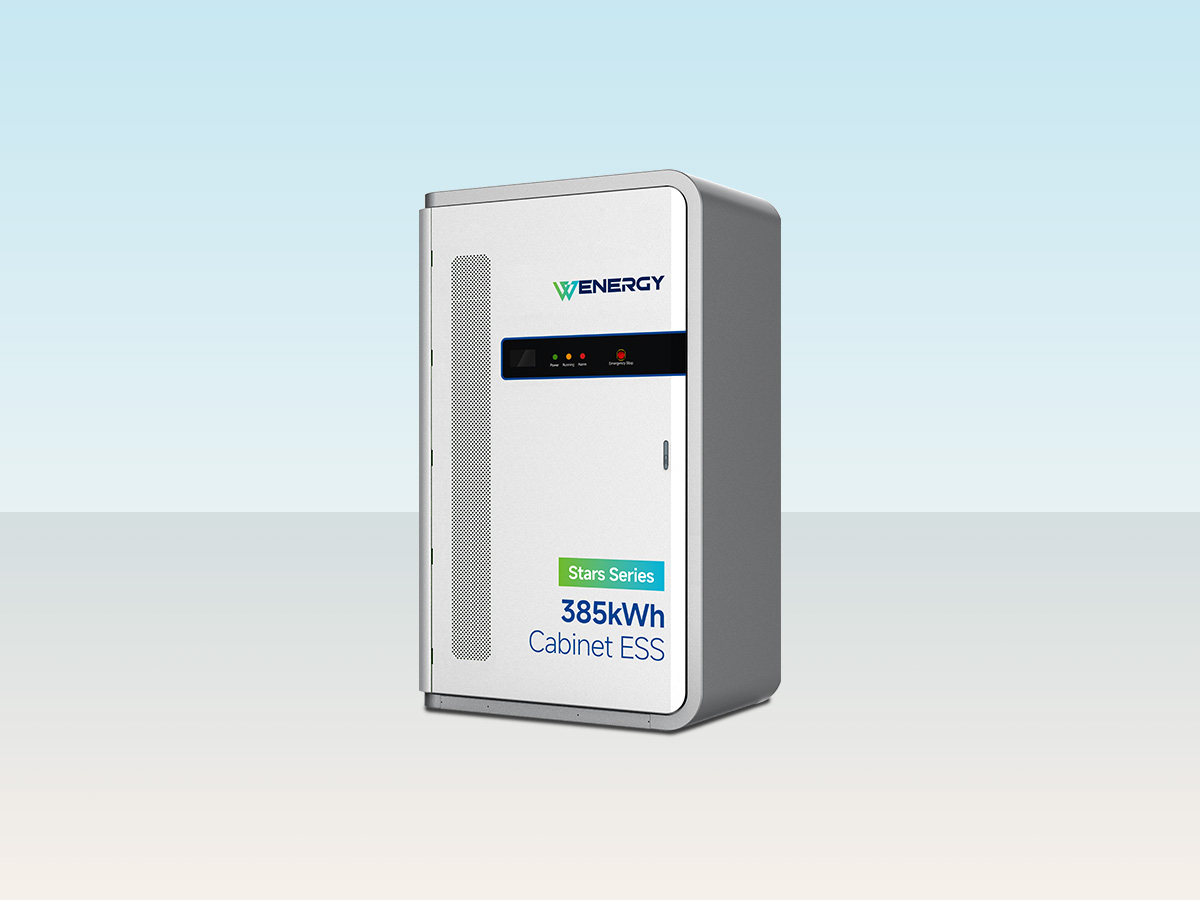
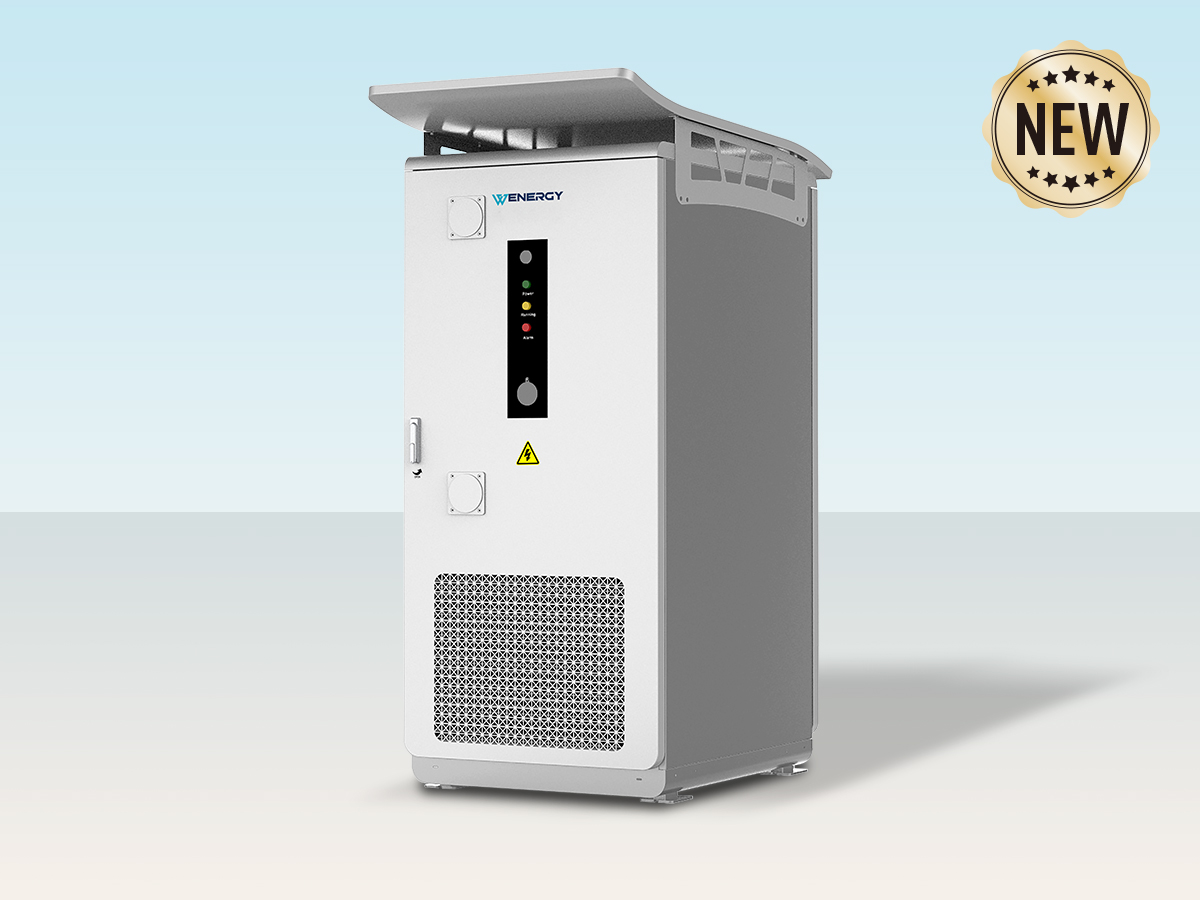
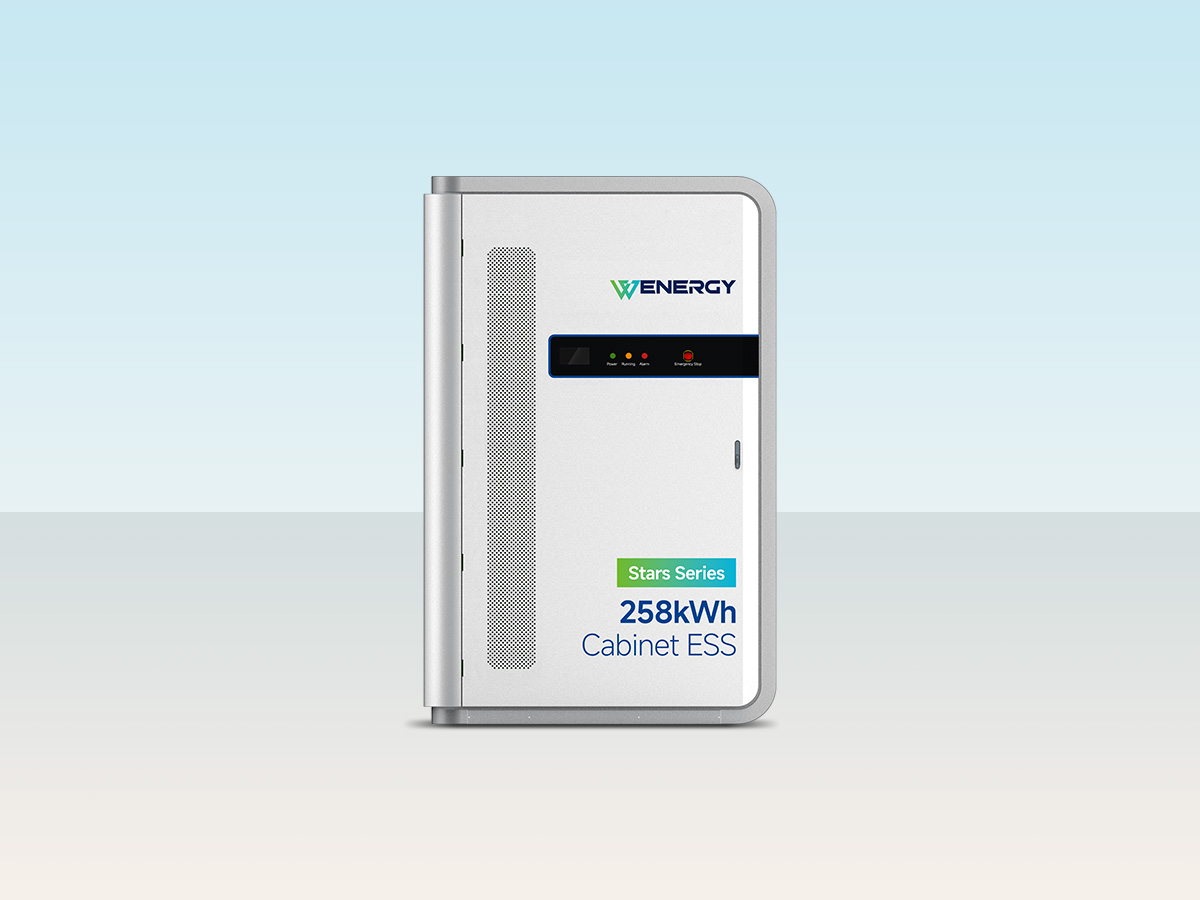
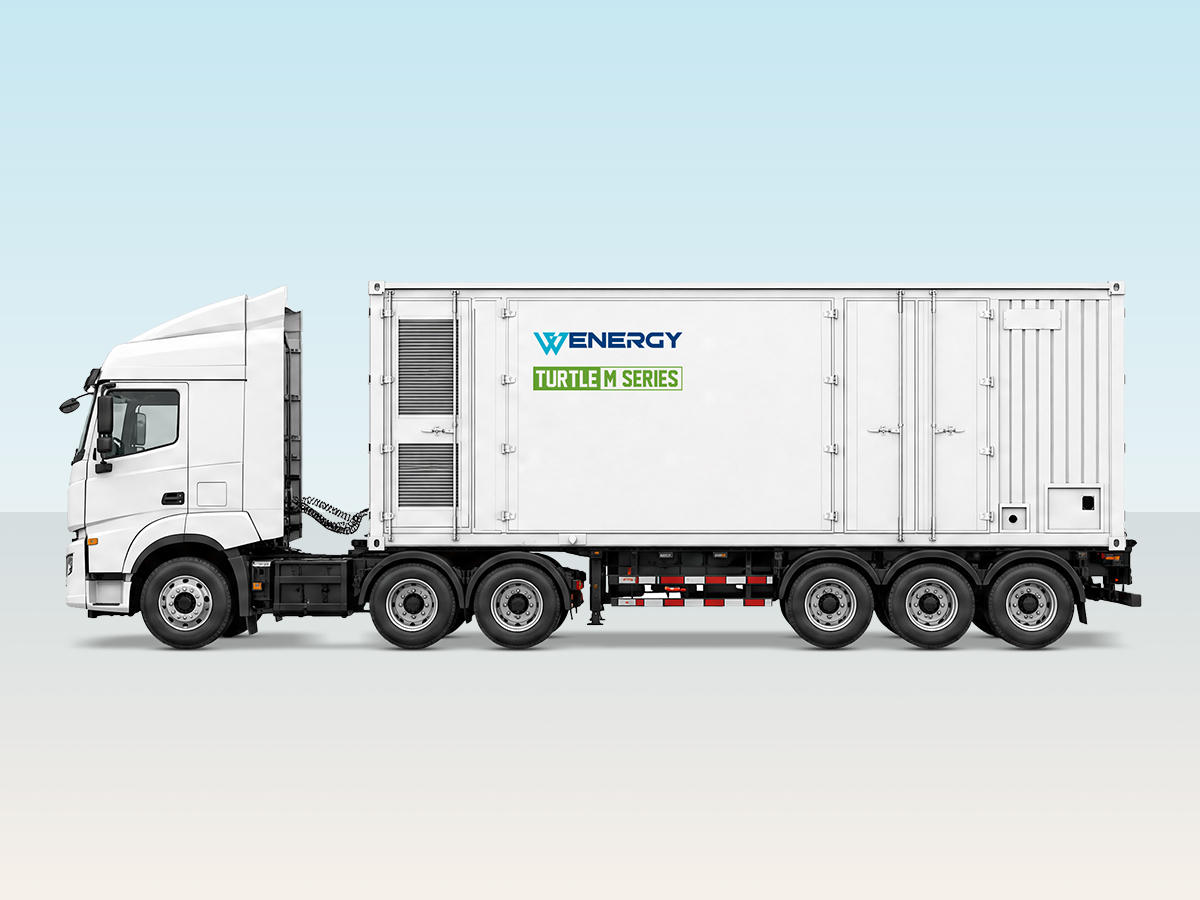
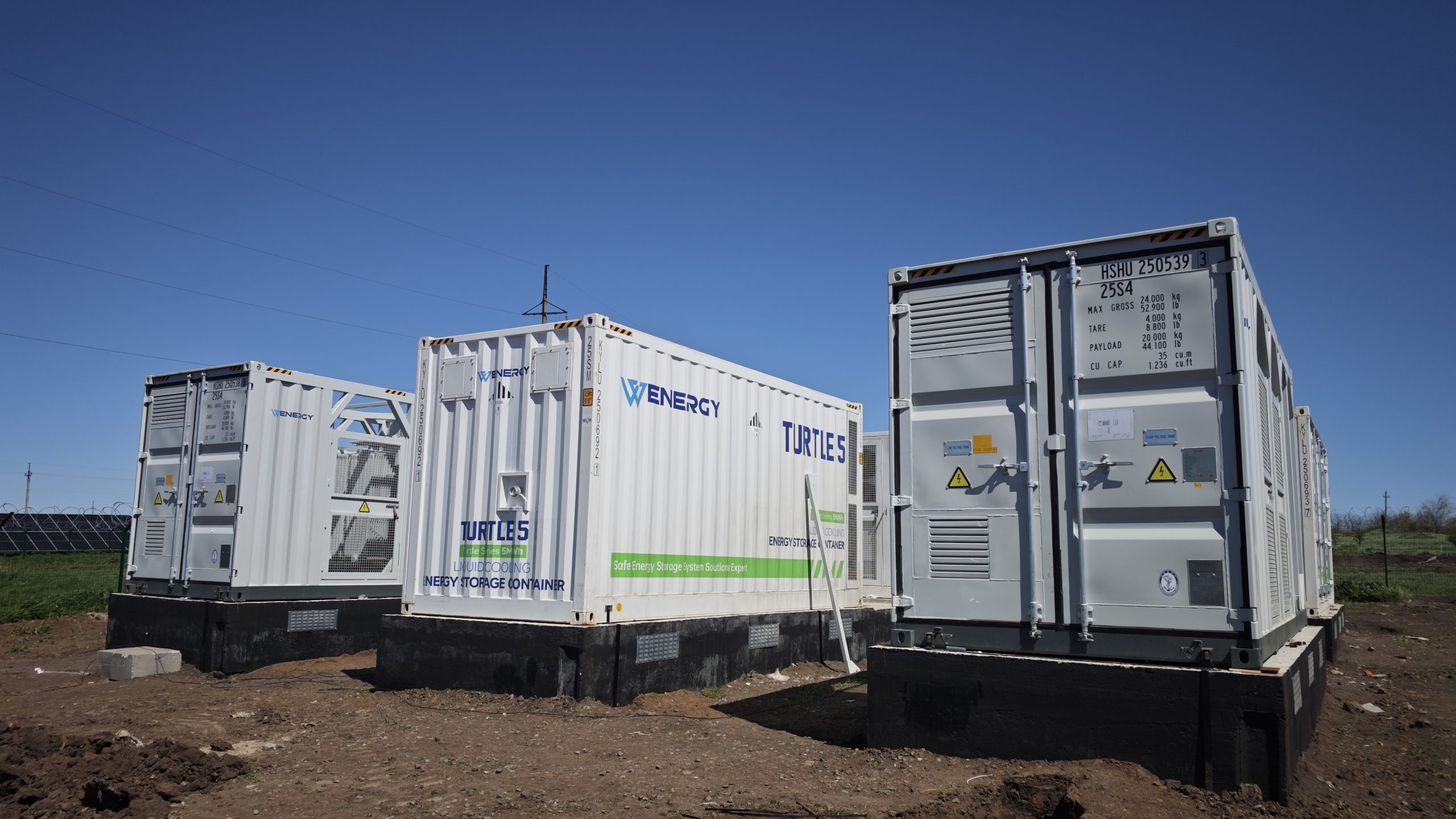
Wenergy’s C&I energy storage project deployed in Ukraine
Ukraine is not just rebuilding a power grid. It is creating a new model for how a nation achieves energy resilience under the most difficult circumstances imaginable. The world is watching, and the world is learning from you.
At Wenergy, we have spent years understanding battery storage technology, grid integration, and the economics of energy independence. We know LFP systems, cold-climate performance, island-mode operation, and black-start capability. But more importantly, we believe real partnerships are built on understanding — not just transactions.
Whether you are an EPC, a project developer, an energy company, an industrial user, or simply exploring your first energy storage project — regardless of project size or stage, we would be happy to talk. It could be a small C&I system or a utility-scale project. You may already have a project, or you may simply be exploring what is possible. No hard sales pitch. Just a conversation between people who care about the same thing:
Building a Ukraine that never goes dark again.
Post time: Aug-19-2026